presents: 
The Plug-In: First Night, First Experiment
Friday, November 13, 2026
The Plug-In: First Night, First Experiment
Tonight, we tried something I’ve never done before, and somehow, it worked!
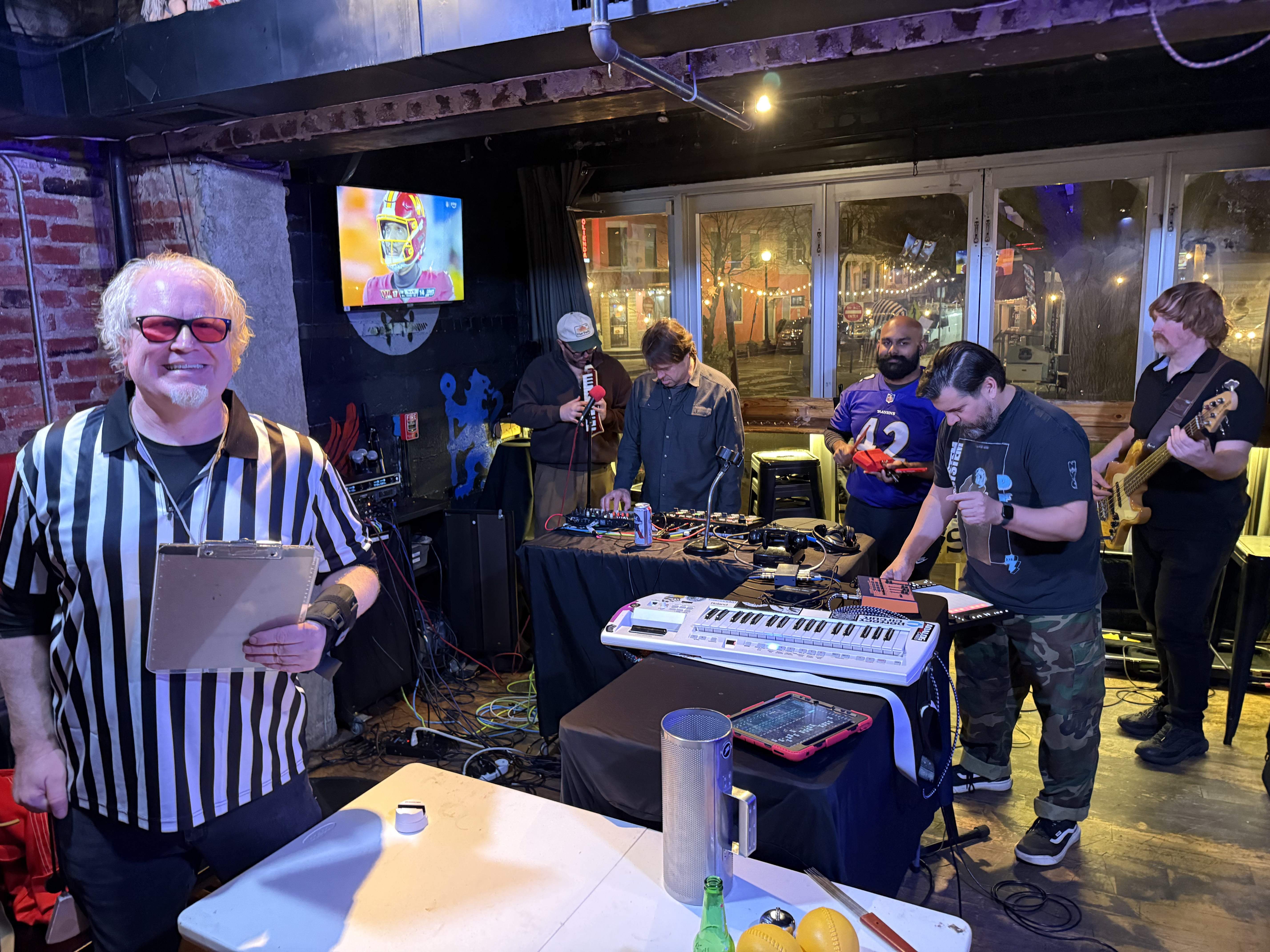
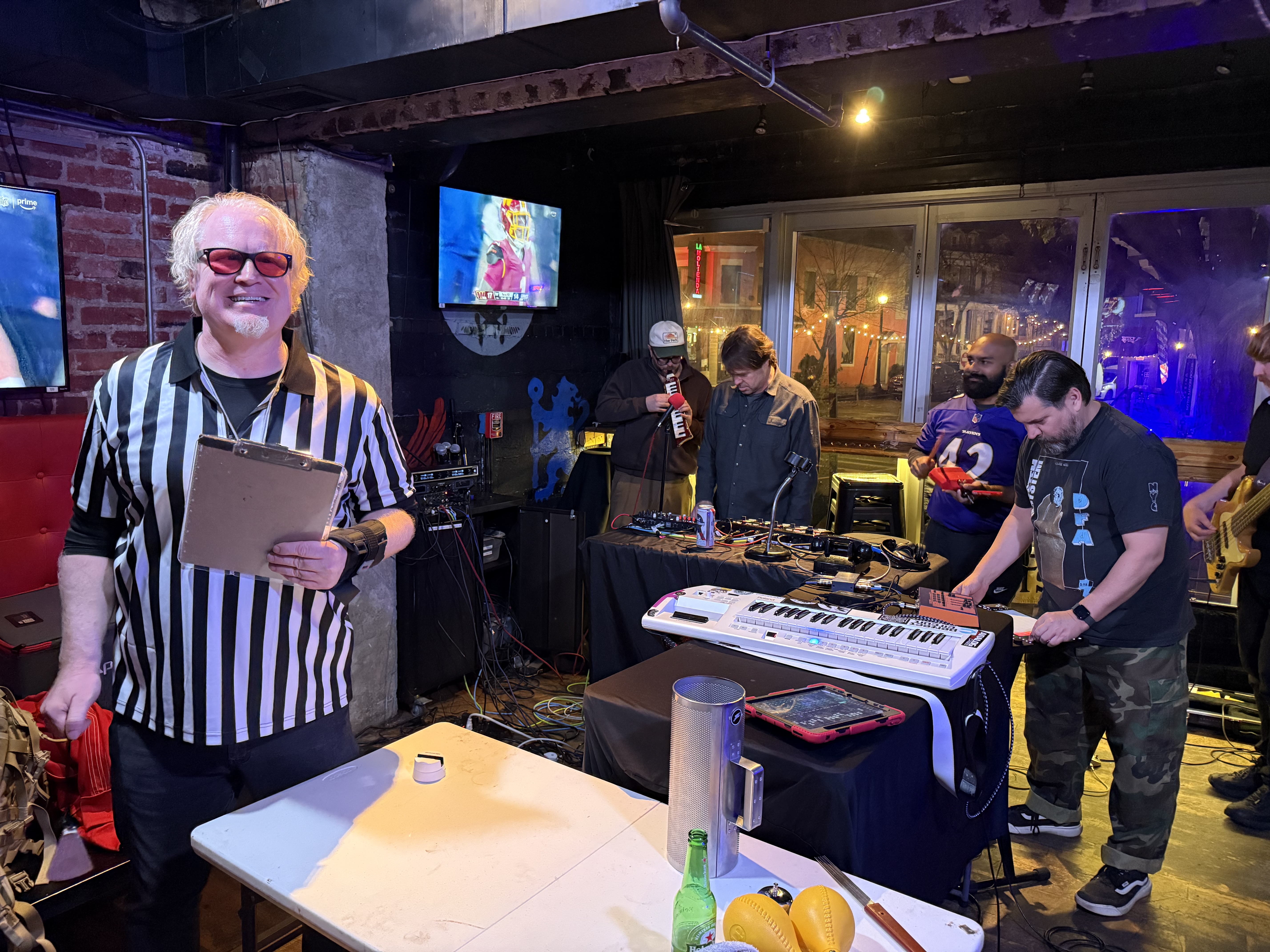
A bunch of friends and collaborators came out to Artemis DC, where we plugged ourselves into the atmosphere of a busy sports bar during the Commanders game.
Instead of competing with the football game, we became part of it. We played mostly instrumental jams and background music that fit surprisingly well with the action on the screens. The sports fans didn’t seem to mind, we brought in enough people to make a difference to the bar’s business, and most importantly, everyone had a good time.
Of course, things didn’t go exactly as planned.
When I arrived, I discovered that Jay, the owner, thought we were scheduled for next week! That was discouraging, especially after all the preparation I’d put into this. But as people started arriving for the game, I explained my idea, and he agreed to let me run with it.
The scheduling mix-up also meant that a guy who had come to do karaoke had to wait until we finished. Fortunately, he was cool about it.
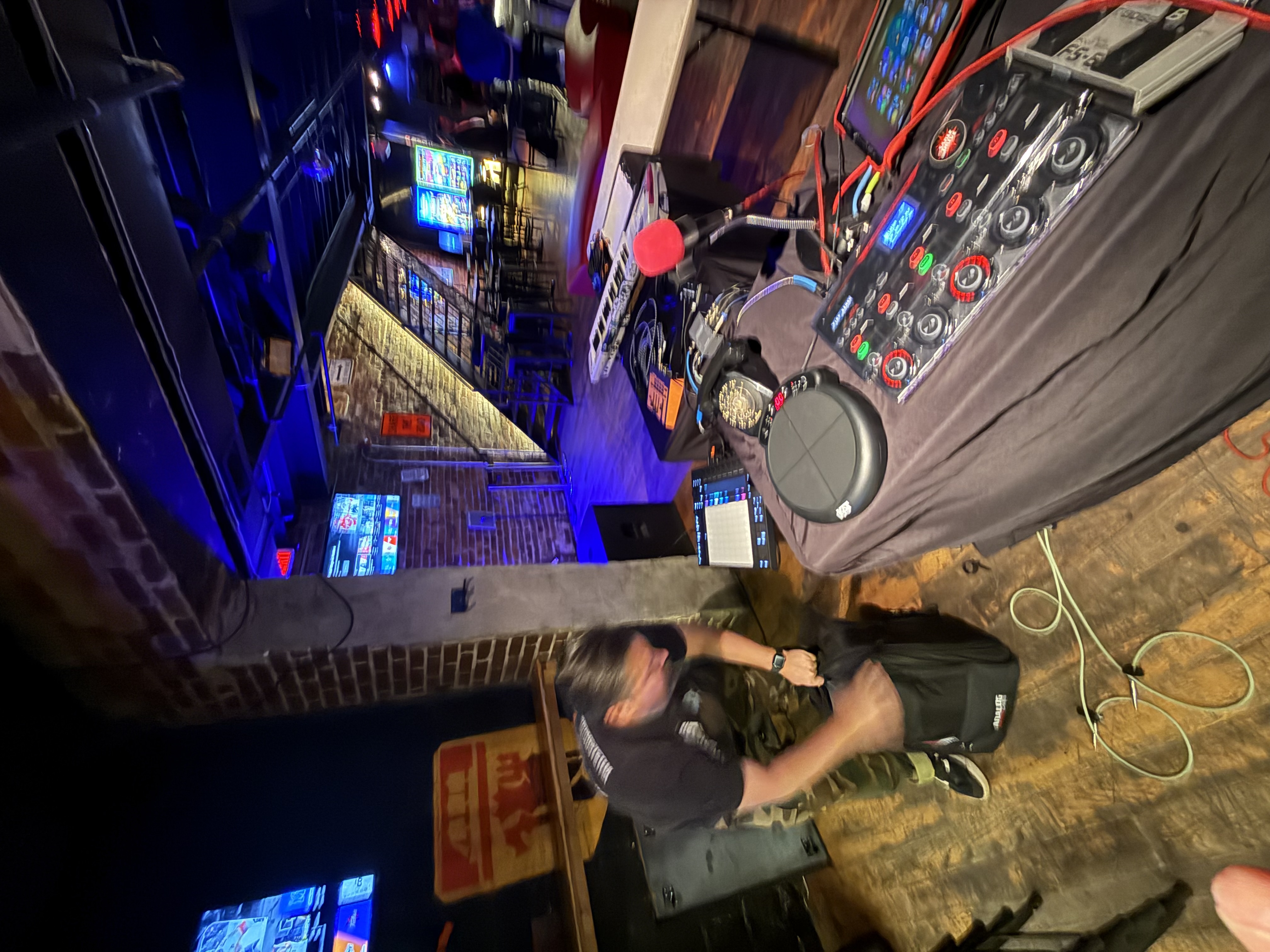
Once we got going, the equipment worked out pretty well. The venue had enough cables for me to connect my junction box and extend four instrument connections. I may eventually get an XLR version or another junction box for quarter-inch cables.
Bob brought a MIDI controller and ran the jams for about half the night. People were able to plug in their own instruments or experiment with my MicroFreak synthesizer and KAT drum. We even attempted a more traditional open mic song, although that part didn’t quite work out this time.
One of my favorite things was seeing people I know from the Evening Star open mic mixing with musicians and friends I’ve met through Sable Drive shows. That’s exactly the kind of community I want The Plug-In to create.
We wrapped up just in time for the exciting conclusion of the football game. I think our music actually enhanced the experience rather than interfering with it.
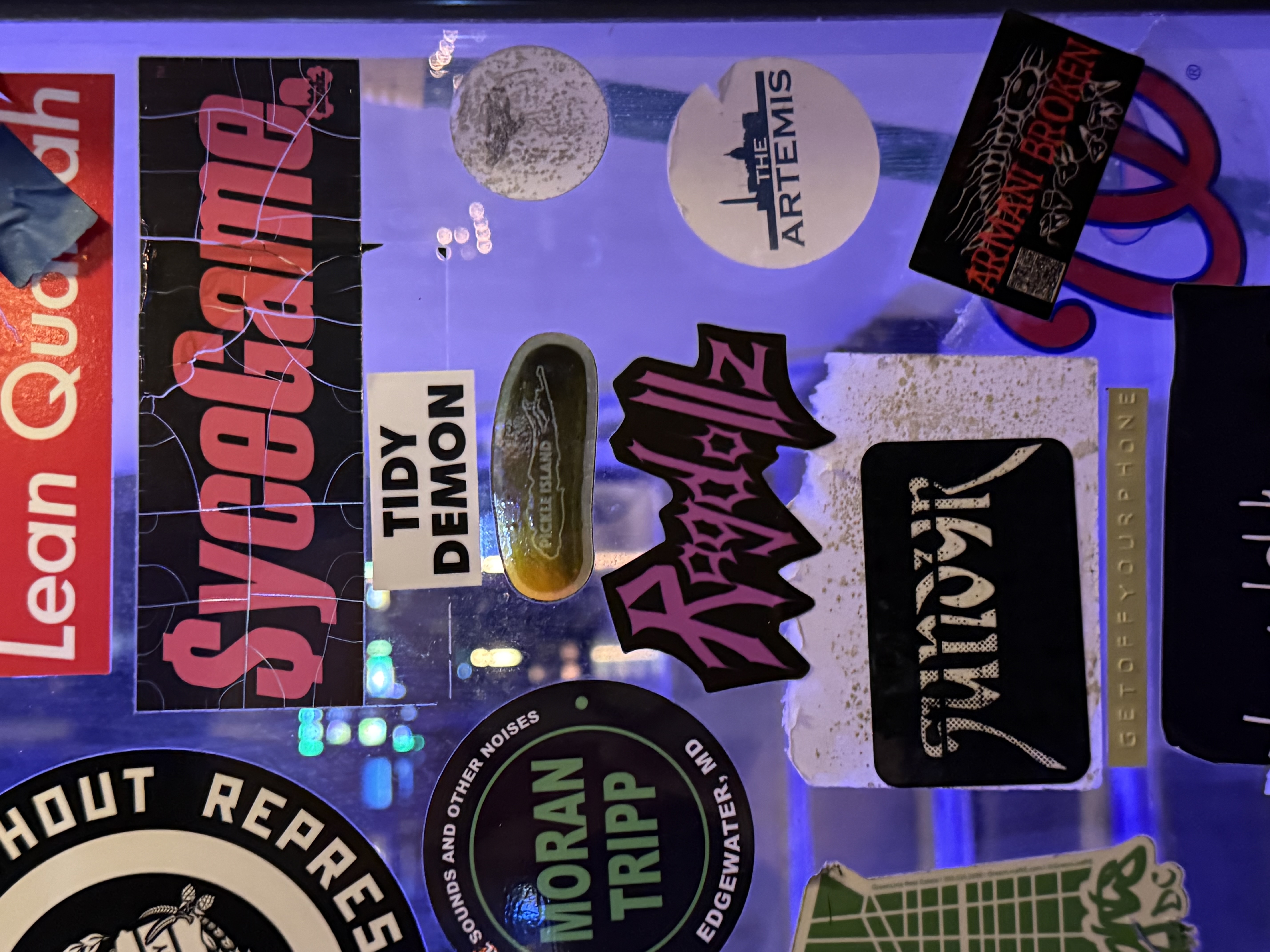
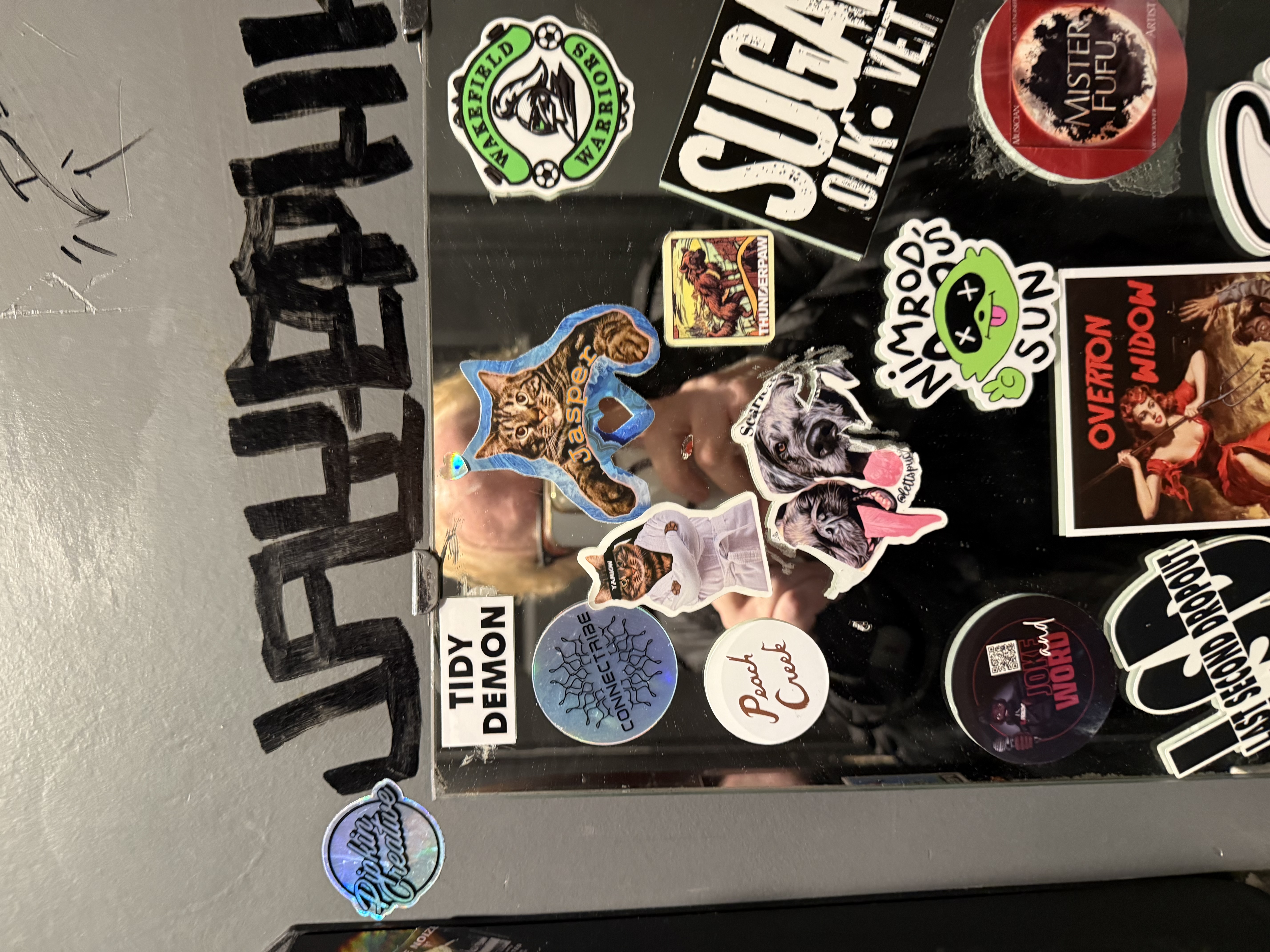
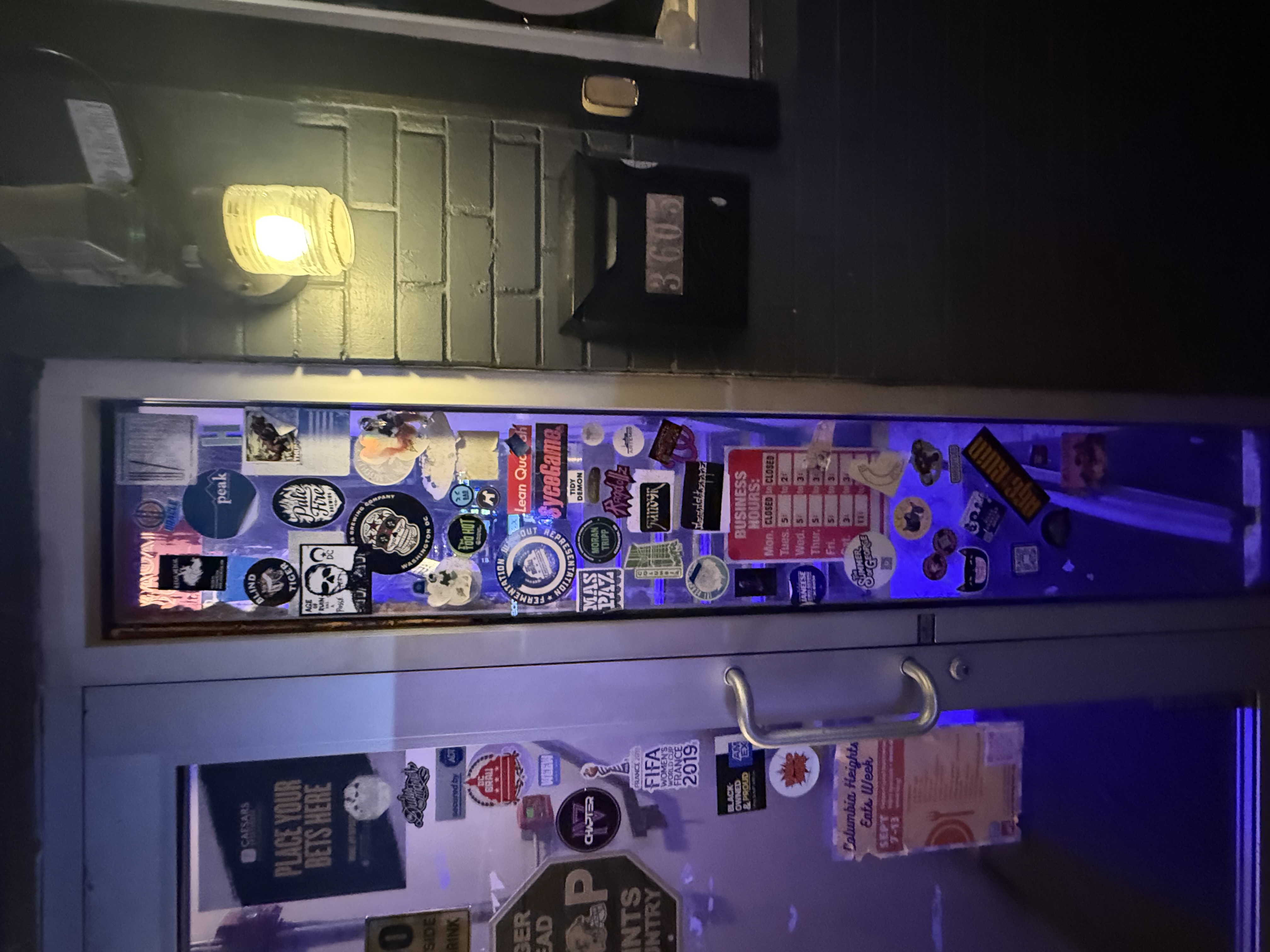
And as a bonus, I managed to sneak a few tiny Tidy Demon stickers into the spaces between the larger band stickers around the venue.
What I Learned
My instincts about keeping the schedule flexible turned out to be correct. We needed to adapt to the room rather than force the room to adapt to us.
If we do another sports-themed night, I’d like to prepare more heroic-sounding musical clips and chord progressions. I can imagine leading a group of musicians through a few big musical moments at key points during a game, almost like a little improvisational marching band.
There were some frustrations, too. I took a financial hit putting this together, and although we brought additional business into the bar, I wasn’t offered any compensation. At first, I felt like I was more of an annoyance than a welcome addition. That concerned me, but I put those feelings aside because I had come there to make this thing work.
Fortunately, Mike K. was there and lives nearby, so he was able to give me a ride home.
A few people suggested trying something similar at MilkCrate in DC. That’s worth exploring. I’d also love to find a venue closer to home, although part of my original goal was to connect with musicians in DC whom I don’t already know.
That’s something I still want to accomplish.
The Most Important Discovery
After thinking about the evening, I realized that the most exciting part wasn’t simply that people showed up or that the music sounded good.
It was watching people figure out how they could fit into the music.
People arrived without necessarily knowing what they were going to do. They listened, experimented, found a place in the jams, and gradually became more confident and adventurous.
Someone would find a rhythm they could contribute to. Someone else would discover how their instrument fit into what was happening. Bob took over leading the jams for a while, and people who hadn’t played together before began making music as a group.
That was incredibly satisfying to watch.
With Sable Drive, I’m usually the person arranging the music, organizing the musicians, and directing the performance. The Plug-In is something different. I’m creating an environment where other people can discover their own roles.
I’ve been fascinated by the collective excitement of marching bands, where everyone contributes to something bigger than themselves. I think I experienced a little of that feeling tonight.
And something else became clear: My job isn’t necessarily to lead every jam. It’s to make it easy for people to join one.
That might mean establishing a simple rhythm, providing instruments, helping someone get connected, or stepping aside and letting another musician take over.
The more comfortable people become, the less they need me to direct everything. Ideally, The Plug-In becomes something that the participants create together rather than something I have to carry on my shoulders.
So, Was It a Success?
I think so.
We brought people together, made music, experimented with a new format, and found a way to coexist with a football game in a sports bar. Nobody knew exactly what was going to happen, including me.
More importantly, I watched people become collaborators. They weren’t just participating. They were learning how to participate, and their confidence grew as the night progressed.
That’s something I can’t measure in ticket sales or bar receipts.
There are still practical problems to solve. I can’t keep absorbing the financial costs indefinitely, and I need a venue partner who is reliable and supportive.
But I’ve also realized that proving The Plug-In works and proving Artemis is the right home for it are two different things.
I think I’ve demonstrated the first. The second is still an open question.
The Plug-In is supposed to be about making connections, trying new things, and creating opportunities for musicians to play together.
Tonight, we actually did that.
I went into this wondering whether anyone would show up and whether the whole idea would work. I came away realizing that the most rewarding part wasn’t performing for people. It was watching them discover what they could contribute.
That’s the experience I want to build on.
And that’s why I’m looking forward to the next one.
Image
Image
Image
Image
Image
Image